History of Joe’s Scuba
Part 1: The Core Philosophy for Running the Dive Shop
Joe Laposta’s approach to the dive industry is a masterclass in organic growth, prioritizing the student experience and financial self-sufficiency over maximizing profit or incurring debt to start the business.
Core Principles
- The Mission: The business is grounded by a single mission: to “share the joy of scuba diving” rather than maximize profit.
- The Mentality: The model is one of organic growth. The business must support itself, maintaining a strict zero-debt policy. 100% of profit is reinvested back into infrastructure, equipment, and staff.
- The Goal: The primary focus is optimizing for the customer and student experience while maintaining safety and standards.
The Partner Mentality and 40/40/20 Pay Structure
Instructors are viewed as partners in the organization, not merely employees. This is formalized through a transparent pay structure designed to attract and retain the best staff by paying them significantly above industry standards.
- 40% of class cost to the Instructor
- 40% of class cost back into Joe’s Scuba: (Allows for reinvestment and infrastructure growth)
- 20% of class cost for variable student costs: (Pool/quarry fees, e-learning, processing certifications, etc)
Part 2: History and Growth Timeline of Joe’s Scuba
The growth of Joe’s Scuba is a chronological progression of reinvestment and infrastructure building, moving from a garage operation to a major training facility without a physical storefront.
Phase 1: The Foundation and Birth of Joe’s Scuba (2008–2021)
- 2008–2021 (Personal Journey): Joe completed his Open Water through Rescue Diver certifications in 2008-2009. His path to Divemaster took nearly five years due to having children and going back to school. He became an instructor in 2017 and worked for Charleston Scuba, teaching less than five students per year from 2017-2021.
- Early 2021 (The Catalyst): Charleston Scuba downsized due to Covid19, leading Joe to continue instructing from his home.
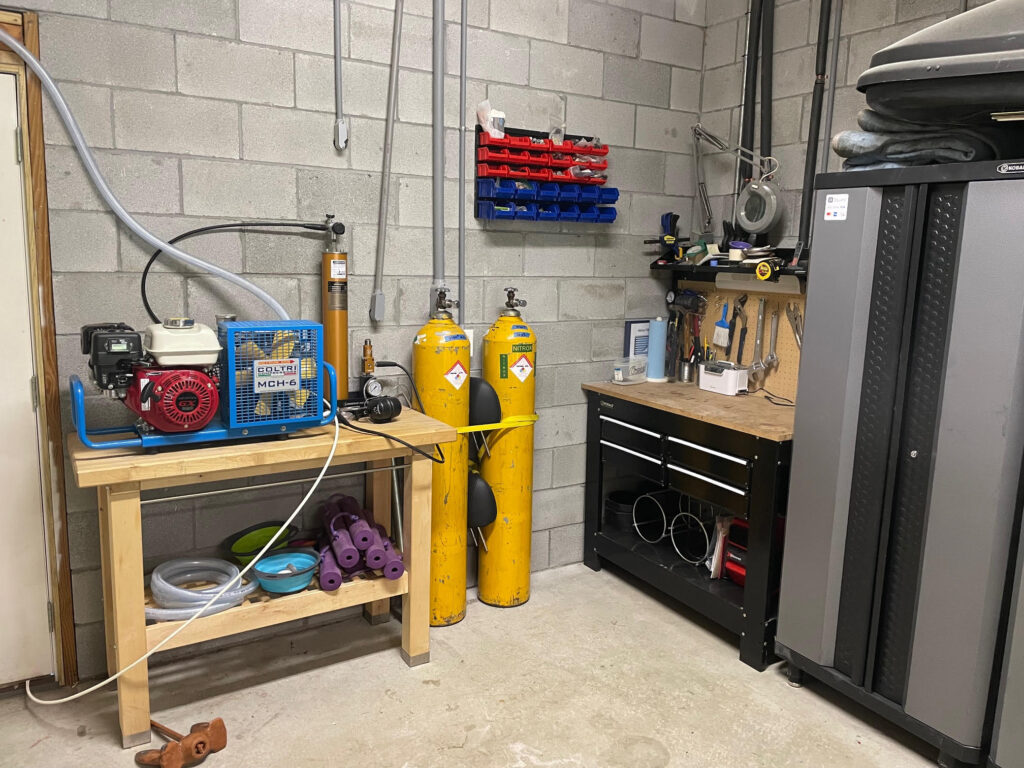
- Initial Setup: Joe’s Scuba was born. Joe purchased his first small, gas-powered compressor and slowly built an inventory of 4-5 sets of used gear and about 10 scuba tanks.
Phase 2: Establishing the Core Operation (2021–2022)
- 2021 (Market Shift): A fire at Charleston Scuba caused a sudden surge in demand necessitating a larger compressor to keep up with demand.
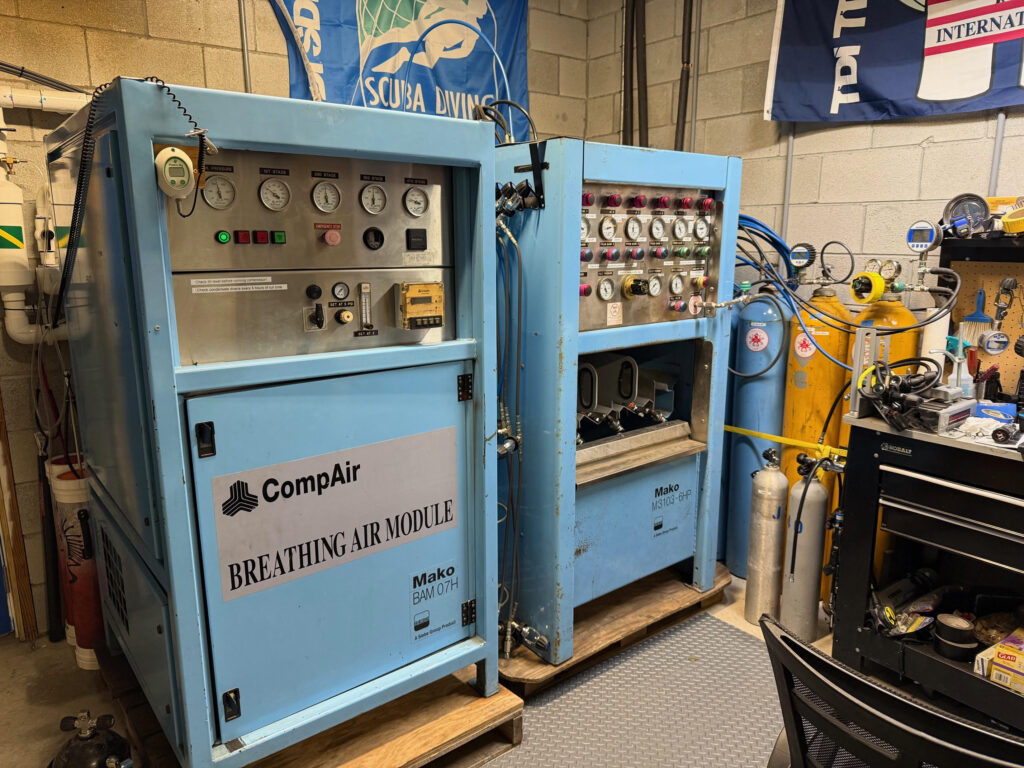
- Scaling Infrastructure: Joe acquired and converted a large, retired fire department 20 CFM compressor, which became the “heartbeat” of the operation. He installed an initial cascade system of 6 cascade storage cylinders.
- 2022 (Professionalization): Joe transitioned from an independent PADI instructor to formally creating the Joe’s Scuba facility through Scuba Diving International (SDI) and crossing over to become an SDI Instructor.
- End of 2022: The first full year of operation resulted in approximately 50 certifications. The cascade system grew to 12 cylinders.
Phase 3: Scaling the Team and Student Gear (2023)
- Reinvestment in Quality Equipment: Profit was used to establish vendor accounts (e.g., HOG Scuba and Shearwater Dive Computers) and transition all teaching equipment from used to new. Student gear grew to 10 regulators and 12 BCDs.
- Team & Capacity Growth: The organization began to attract and support additional instructors. Scuba tank infrastructure grew to 40 tanks.
- End of 2023: Completed just over 120 certifications.
Phase 4: Meteoric Growth and Unique Investment (2024)
- Developing Instructors: Joe completed his Instructor Trainer certification to begin professional-level courses and train new instructors in-house. Staff grew to 5 instructors.
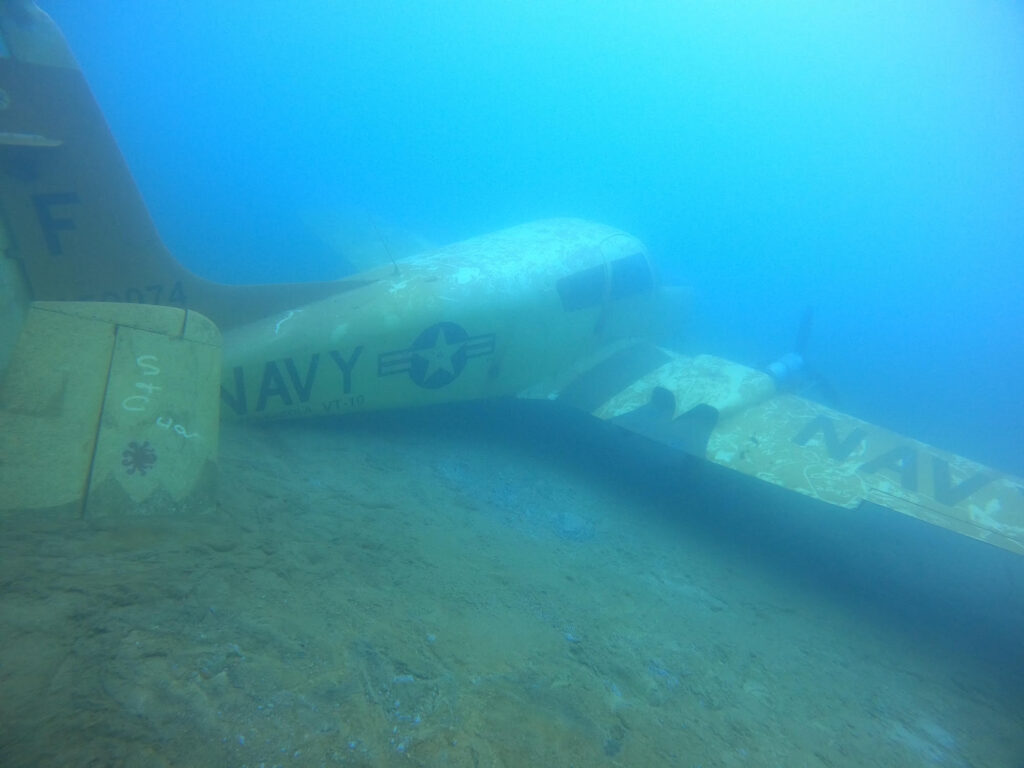
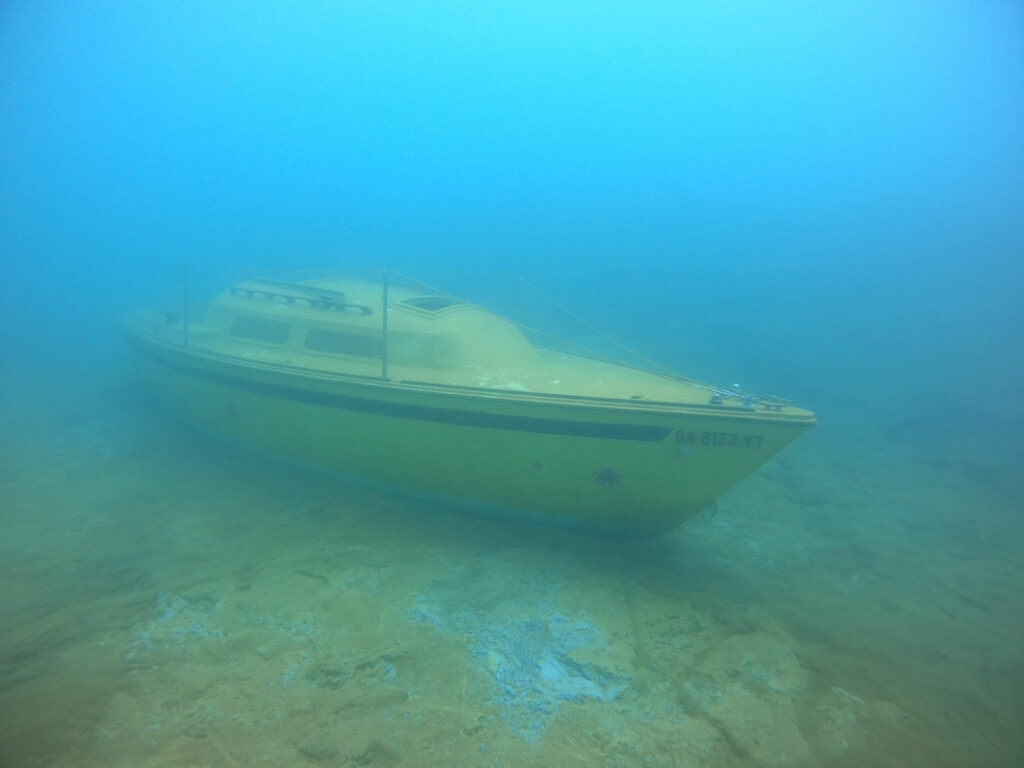
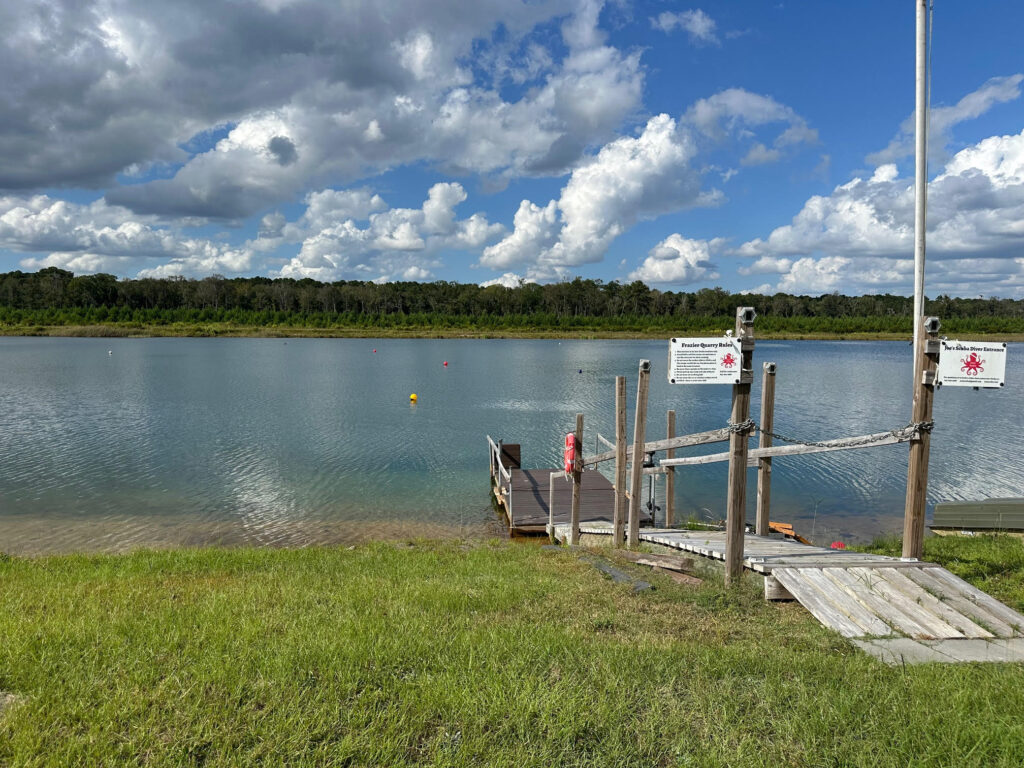
- The Ravenel Quarry Project (February-August 2024): A significant investment was made to secure a proprietary training site at the quarry. Infrastructure was built, including a floating dock and a handicap-accessible ramp.
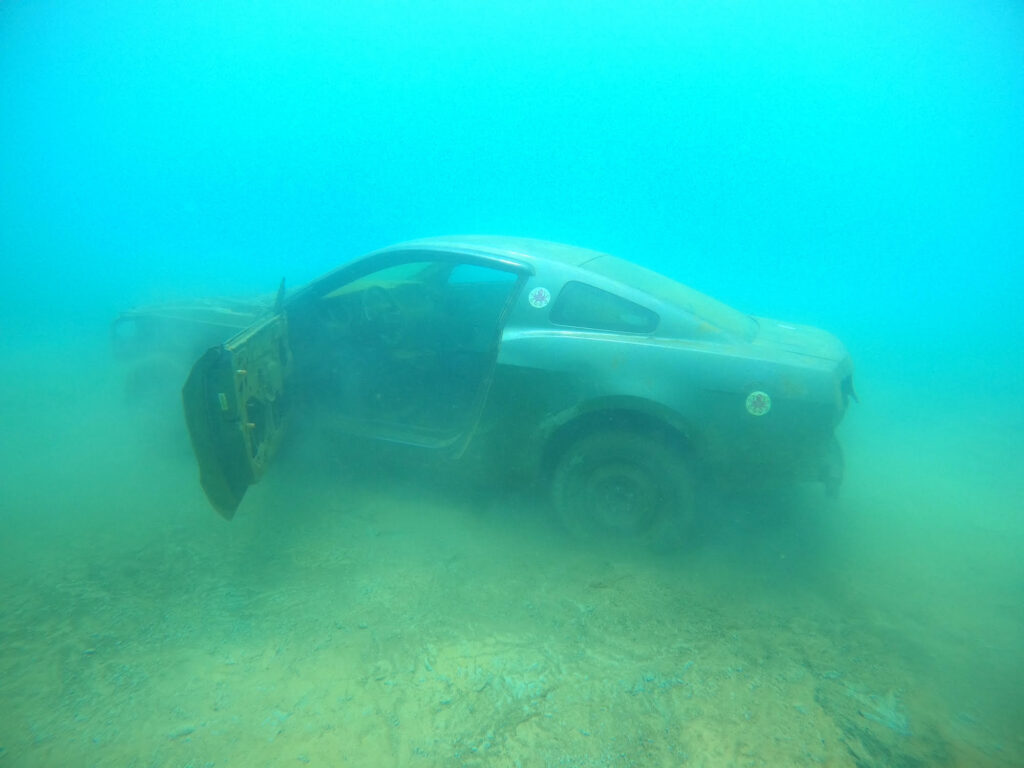
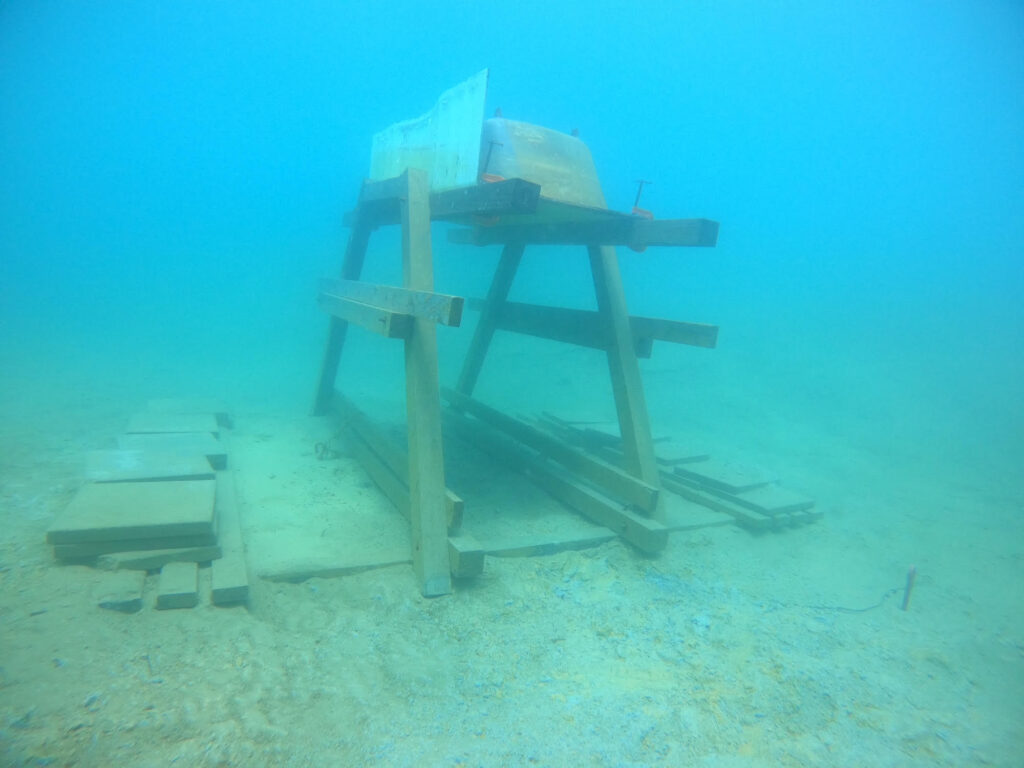
- The “Wreck Park”: The organization sank unique training aids to enhance the student experience: a Navy Cessna 310 airplane, a Mustang car, a Sailboat, and a custom-built Diving Bell.
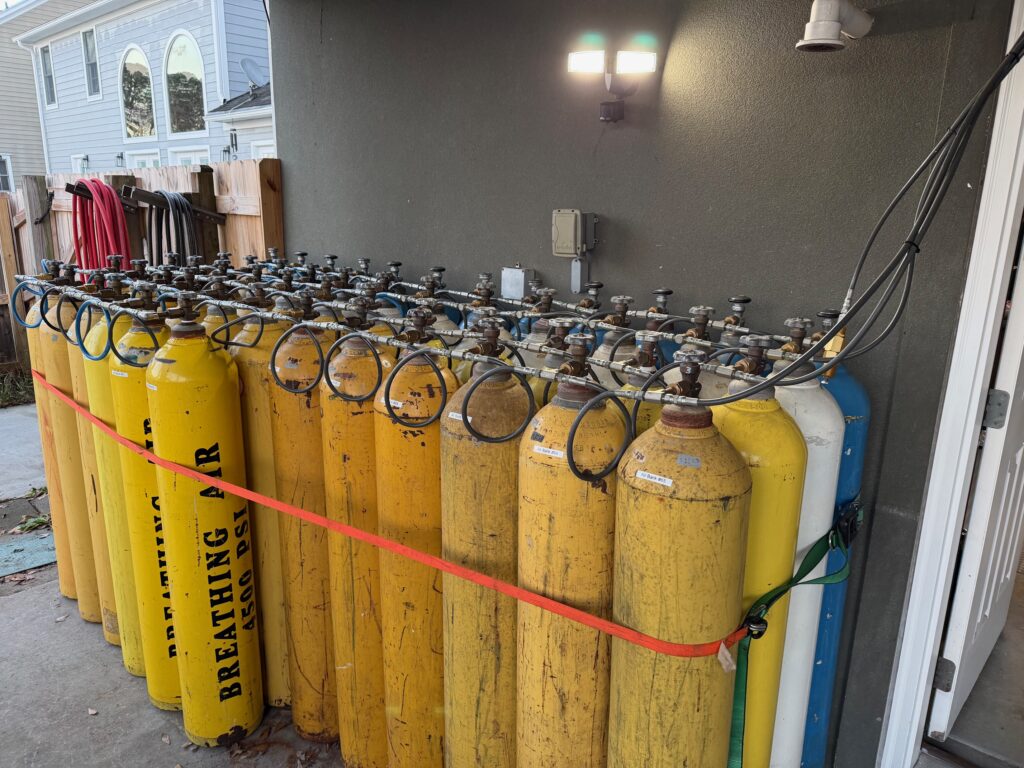
- End of 2024: Certified just over 190 students. Cascade system reached 40 cylinders.
Phase 5: Optimization, Culture, and the Next Horizon (2025 Onward)
- Optimization: Quality Over Quantity: Shifted to only small-group instruction. The max student-to-instructor ratio was shrunk from the standard 8:1 (had always kept a max student to professional ratio of 4:1 with divemaster) down to a max of 4:1 student to instructor.
- Logistics Refinement: Classes moved to a private pool for most classes. The aggressive two-full-day Open Water class schedule was spread out to three less-aggressive days to be more manageable for students.
- Operational Maturity (End of 2025): Infrastructure and capacity reached a massive scale, including 120 scuba tanks and over 100 cascade cylinders, allowing for over 30,000 ft³ of banked air and Nitrox.
- Final Growth Metric: Staff grew to 10 instructors and 2 divemasters, completing over 250 certifications.
- The Future: Joe acknowledges the necessity of opening a physical brick-and-mortar shop sometime in the future but is holding off as long as possible in order to grow infrastructure, always optimize the student experience, and maintain the highest staff compensation.
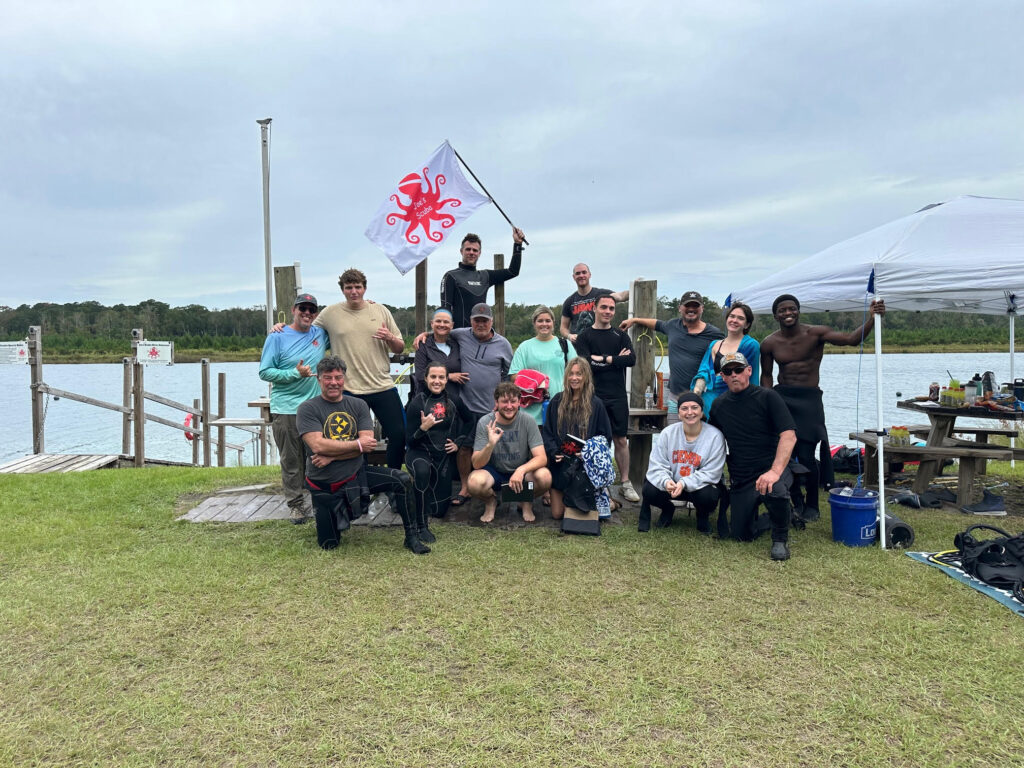
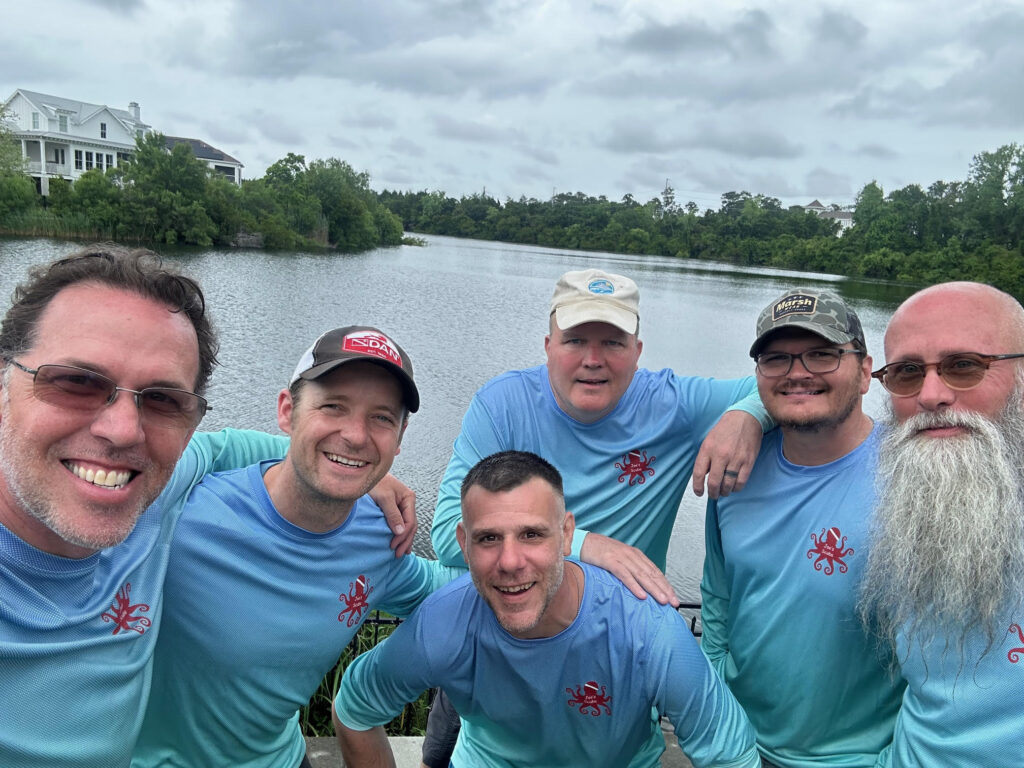
Joe Laposta’s Final Takeaway: The model is a duplicatable process that requires time, the right attitude, and an unyielding commitment to sharing the joy of diving. The key is to run the business to be profitable but to never lose the mentality of optimizing for the student experience.